Success stories
More flexibility with automation
At Väderstad, extreme automation is the main tool that binds efficiency and flexibility in the production cycle.
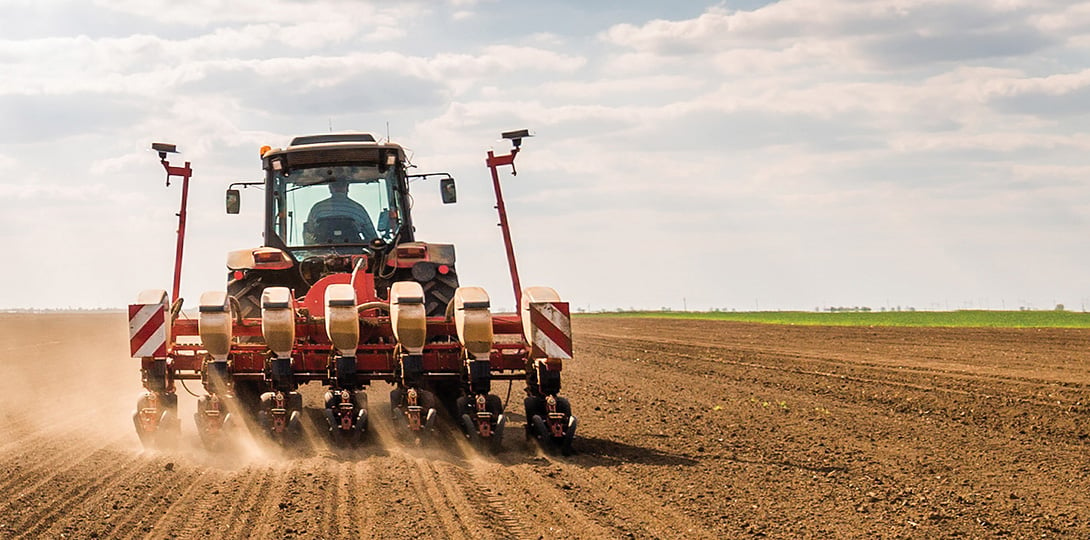
Väderstad is among the leading names renowned in Sweden for the production of tillers and agricultural machinery for ploughing and sowing through a fully automated cycle that starts from the raw material store and ends with the laser cutting of semi-finished tubes and robotized welding of the machinery produced. At Väderstad, extreme automation is the main tool that binds efficiency and flexibility in the production cycle.
To describe the Swedish company Väderstad, specialized in the production of tillers and agricultural machinery for ploughing and sowing, we should start from the company's background. In fact, this family business was founded by the father of the current owners, who have experienced the life and growth of the company first hand, with Andreas Stark, Production Director together with his brothers Crister, Bo and sister Christina, respectively, Head of the Board, Manager of the Scandinavian market and Managing Director, who run the company founded by their father, Rune Stark.
What an idea!

While listening to Andreas Stark telling us about the story of
the company, you cannot but be impressed by the strong contrast
between today's avant-garde organization, which can boast an
automation level in its production that is difficult to find
elsewhere, and what it was in the beginning, characterized by such
a simple, but effective idea. In fact, Rune Stark, started by
manufacturing a rigid tine harrow to be used in a small farm at a
short distance from where the company is today. The result was so
effective that neighbours asked to have others made for them and
this was the beginning of the business. The family-run business was
therefore set up by Rune together with his wife Siw and it is now
run by their four children.
"My parents started in our farm - says Andreas - but soon, due to
the size of the first pieces of machinery, the poor power
connections and the roads that were too narrow for heavy traffic,
it was necessary to move to larger premises, which took place in
1967 when the company rented a barn in another farm and in 1972 we
started building where we are now".
The story of Väderstad is characterised by continuous growth and
started from the idea of a farmer who was particularly able and
business-minded. "In the two-year period from 1989 to 1990,
agriculture suffered a strong depression, but that was the time for
us to expand into other areas of interest starting with the
manufacture of seeders, which today account for 60-65% of our
turnover".
From the warehouse to laser tube fully automatically
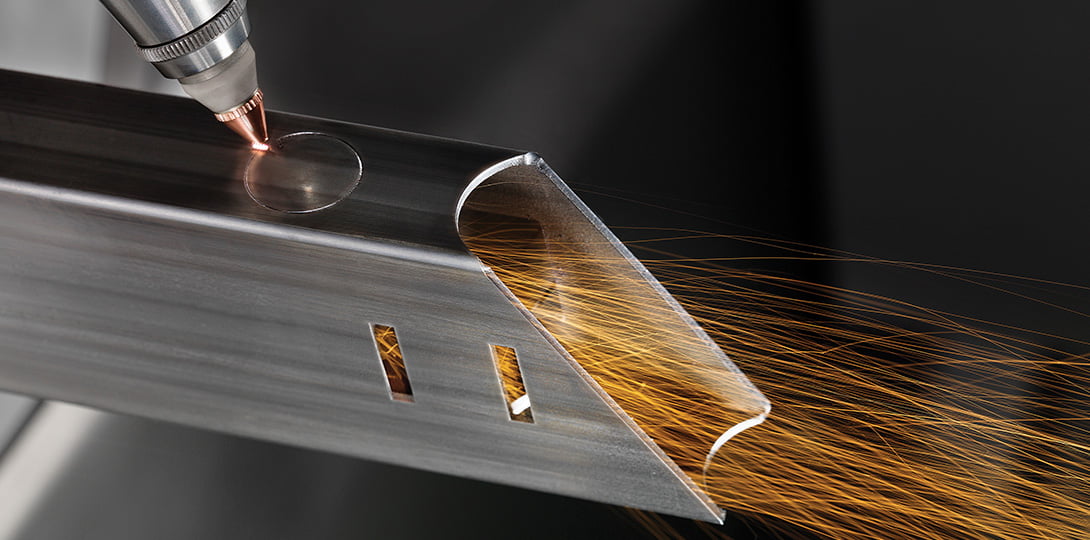
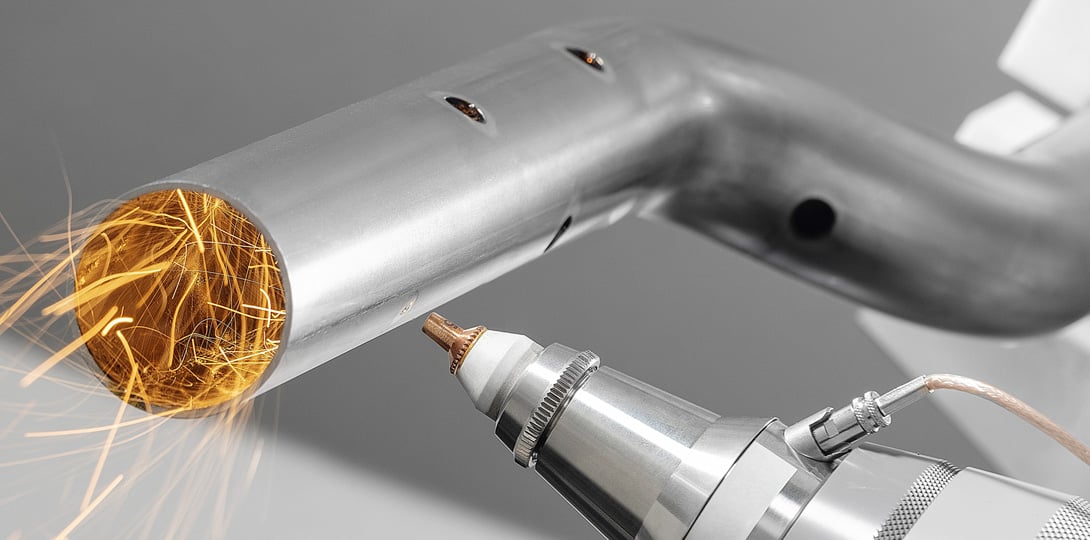
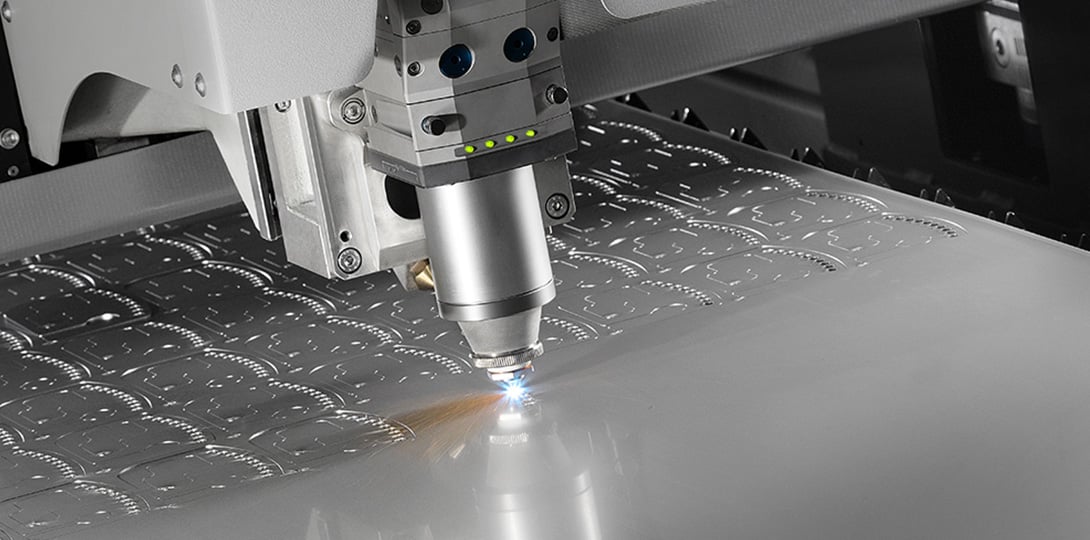
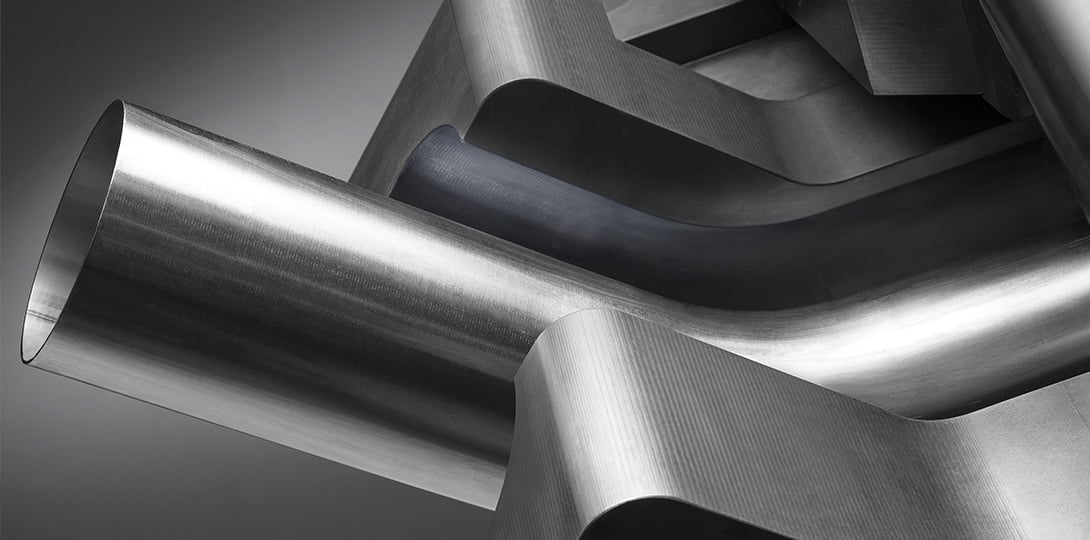
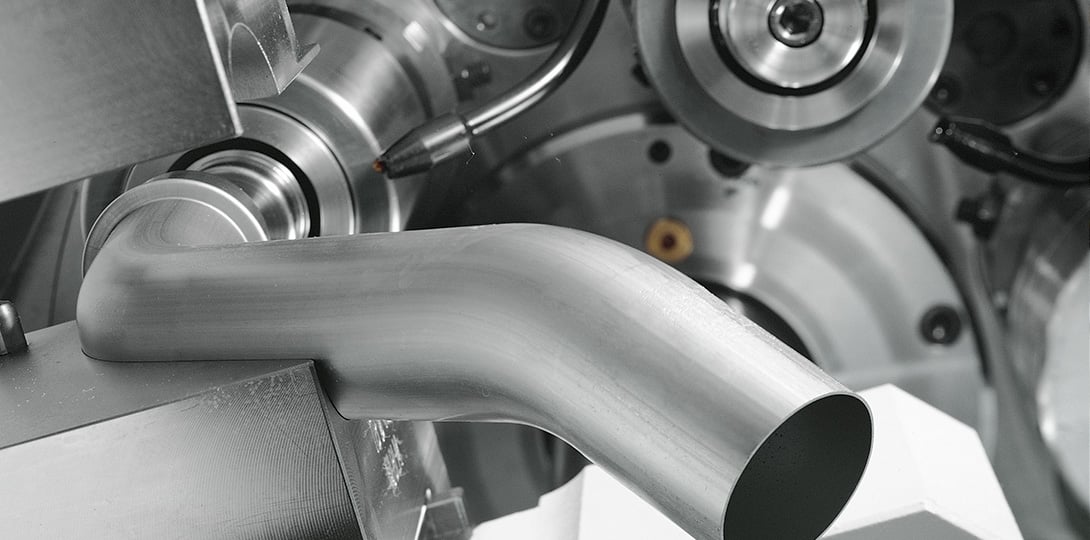
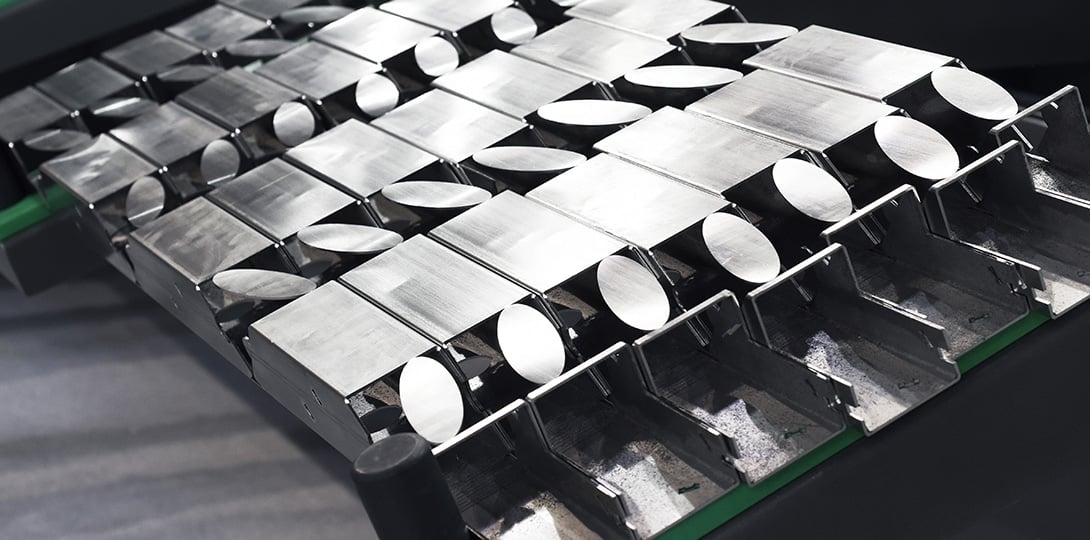
Even from the production organizational point of view there have been many changes, which from the initial artisan phases have gradually brought Väderstad to the extreme level of automation that it has today. The company is structured in relation to the production flow of the materials, starting from a building where the raw material is stored. When a truck arrives, the raw material is unloaded and positioned (semi-automatically) on shelves. At this point, the warehouse is closed and manning is not required. When a job order needs a certain type of material, a request is received on the warehouse computer to retrieve a bundle of tubes; the material is automatically selected and picked-up by the automatic bridge cranes, which place it on trolleys travelling underground that exit the warehouse and transfer the bundle to the building where the laser machines are located; the bundle is then unloaded in a tidy manner near the machines. The ADIGE LT8 laser cutting systems cut the tubes according to the job requirements and unload them tidily. An big robot collects the pieces and places them in appropriate trolleys that are stored in another transit warehouse depending on the job order requirements. Each trolley contains pieces that are required to weld a particular frame. The boxes that are stored in the transit warehouse are then collected and transferred to the welding robots where each frame is physically assembled.
Goal achieved

For this reason, in the past, we had a considerable amount of material spread out around the welding stations, but now it is completely different. The first step was to use a single warehouse with a forklift operator who retrieved the various articles and delivered them to the welding stations. In this way, however, we had an enormous warehouse of cut and machined tubes and when there were errors in the machinings, we had to step in and at times throw away the pieces. It was a slow way of working and, moreover, when you machine a tube that has been cut on different machines, you cannot expect precision. We wanted greater precision to use welding robots and then we wanted to develop our machinery in a completely different way and this was the main reason why we went for laser cutting, which allowed us to process any shape and size. So we started to search for a solution to our requirements and what can be seen now is the end result.
A traditional production works in batches, whereas our objective was to produce a single example of a machine in the most efficient way possible. We started an extremely flexible manufacturing cycle aimed at producing a single machine at a time. The goal is now to produce what is necessary for the next shift or the next day. Today is Thursday and we have entered in the production system the output for next Thursday. The raw material is in the warehouse, whereas other articles may not be in our facilities yet and must be delivered by our suppliers, but in the meantime the laser data of what has to be cut is transferred to the system and the parts that need to be welded tomorrow will be in the warehouse tonight.
"Our strong points are quality and solutions" concludes Andreas. In Sweden, we have an 80% market share, but in the rest of Europe there is a lot of competition. Some of our competitors have laser systems, but no one uses our production concepts. Among other things, it was not easy to find a laser system that was suitable to meet our specific needs; some were too small and others too big. In the end, we found ADIGE who understood what we were looking for and provided us with what we needed to the extent that if there weren't a recession in progress, we would have had our third LT8. This is because our view of the future is positive in relation to the increase in the price of grain. As to production innovations, we are already thinking about developing products that were impossible to think of producing, whereas at an organizational level, we realize that we can still improve. In fact, in the welding area, no material should be waiting to be processed, that's why in the future, the cut tubes must arrive directly from the laser machines".


Back to index